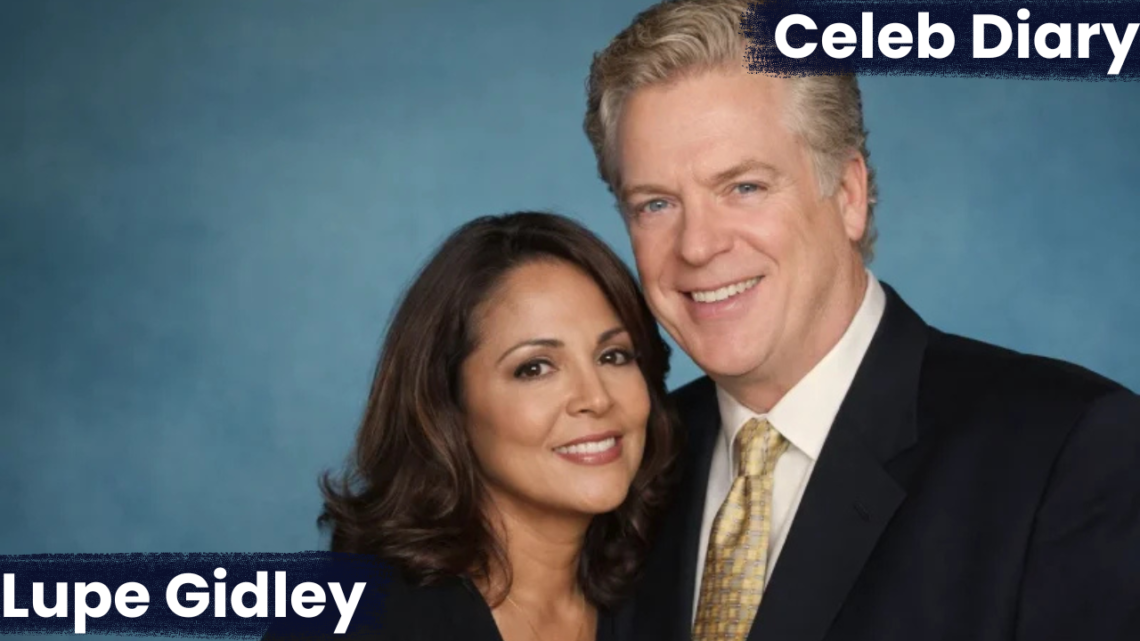
In the sprawling, neon-drenched history of Hollywood, the narrative is almost always dominated by the performers who stand under the hot lights of the stage or the camera lens. We are conditioned to seek out the biographies of those who crave the spotlight—the actors, the directors, the producers, and, in our current digital age, the influencers. Yet, there exists a second category of individuals within the entertainment ecosystem: the partners who live alongside the fame, often choosing to observe the whirlwind from the quiet stability of the sidelines. Lupe Gidley is one such figure.
As an American former model and actress, Gidley has navigated the periphery of the entertainment industry for decades. However, her name—searched with increasing curiosity in 2026—carries a different kind of weight. It is not associated with scandals, social media controversies, or self-promotional branding. Instead, it is associated with a deliberate, radical choice: the protection of personal privacy. While her name is often linked to that of her husband, veteran actor Christopher McDonald, Gidley represents a version of celebrity-adjacent life that is fast becoming a relic of a bygone era.
This comprehensive guide serves as an exploration of her life, her professional trajectory, the dynamics of her enduring marriage, and the cultural implications of living a private life in an era that demands total digital transparency.
The Pre-Digital Entertainment Landscape: A Professional Context
To understand the trajectory of Lupe Gidley’s early career, one must first dismantle the modern conception of “becoming a star.” Today, the barrier to entry for aspiring models and actors has been shattered by the ubiquity of social media. A teenager with a smartphone and a strong algorithm can find an audience of millions overnight. This is the “Influencer Model” of celebrity, where personality, vulnerability, and lifestyle curation are the primary commodities.
Lupe Gidley did not enter the industry in this ecosystem. Her formative years in the professional sphere—stretching back into the 1980s and early 1990s—belong to the “Analog Era” of Hollywood. In this world, the gatekeepers were not software developers in Silicon Valley, but agencies, casting directors, and physical talent scouts.
The Life of an 80s/90s Model
For an aspiring model like Gidley, the career path was physical, grueling, and intensely private. There were no Instagram profiles to serve as personal calling cards. Instead, success was predicated on:
- The Physical Portfolio: A tangible, leather-bound book containing high-quality prints from editorial and commercial shoots. This book was the model’s resume, passport, and identity.
- Agency Representation: Success depended on securing a contract with a reputable agency. These agencies acted as the curators of taste and the facilitators of business, often shielding their clients from the public until they were deemed “ready.”
- The Casting Call: The casting process was an exercise in grit. It involved showing up to studios in person, waiting in lines, and performing under the pressure of immediate judgment.
- Commercial Versatility: Most models of this era, unless they were high-fashion icons, worked in the commercial sector. This meant print ads for household goods, catalogs, and television commercials. It was a trade-based career, emphasizing the ability to take direction, wear a product well, and deliver a specific look on cue.
Gidley’s decision to pursue this path speaks to a mindset that prioritized professional growth over the ephemeral rush of public recognition. The industry she entered rewarded consistency, reliability, and visual adaptability. It was a career of service to the product, not the individual.
The Professional Pivot: Modeling to Acting
The transition from modeling to acting is a well-trodden path in Hollywood, populated by figures ranging from Marilyn Monroe to modern blockbuster stars. For many models, the shift is a natural evolution—a way to utilize the camera-readiness developed in photo shoots to tell a narrative.
While Lupe Gidley’s filmography is not characterized by the sprawling list of credits of a mainstream A-lister, her move into acting was a logical progression of her professional skill set. In the late 20th century, the professional model was often seen as a “type.” Directors would look at a portfolio and see a character.
Her work in acting provided her with a view of the film industry from the inside. It offered insight into the chaotic, collaborative, and often stressful nature of set life. However, unlike many of her contemporaries who treated acting as a springboard for further fame, Gidley appears to have used her experiences in the industry as a vocation rather than a mission for global celebrity. This professional restraint is a hallmark of her entire career. She participated in the industry, learned its mechanics, contributed her talent, and then moved on.
The Anatomy of a Hollywood Marriage: Lupe Gidley and Christopher McDonald
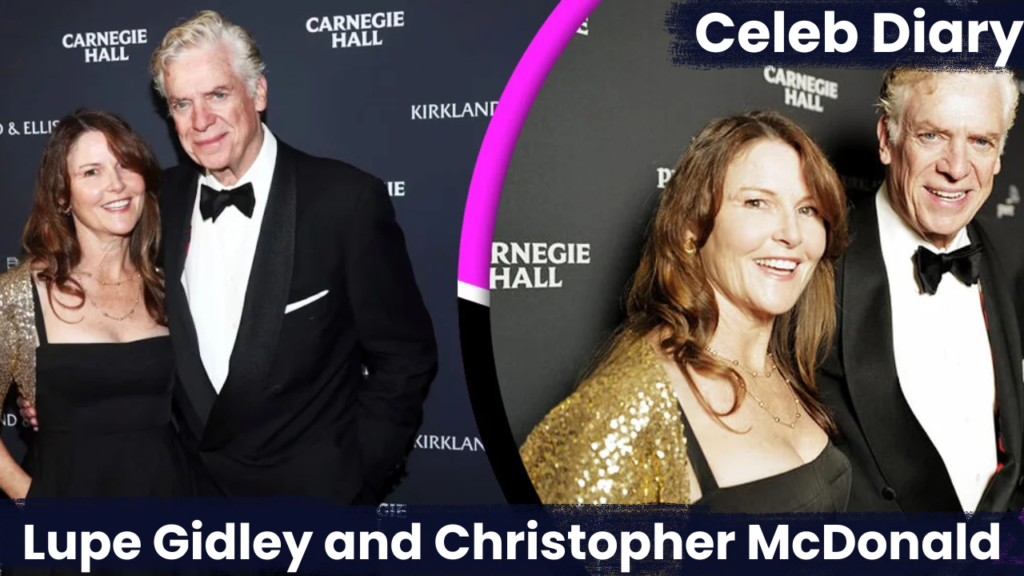
The most significant public aspect of Lupe Gidley’s life is her marriage to Christopher McDonald, whom she wed in 1992. In a culture where celebrity marriages are often treated as “content”—subjected to tabloid dissection, reality television documentation, and social media commentary—the Gidley-McDonald union stands as a quiet anomaly.
The Context of Christopher McDonald’s Career
To understand the nature of their public life, one must acknowledge the nature of Christopher McDonald’s work. McDonald is a “Working Actor” par excellence. His filmography is not just a list; it is a dictionary of American cinema. From the quintessential villain Shooter McGavin in Happy Gilmore to his dramatic turns in Requiem for a Dream and Thelma & Louise, McDonald is an actor who is respected by his peers and instantly recognizable to the public.
Being married to such a figure offers a specific set of challenges:
- Public Recognition: McDonald cannot walk down a street without being approached by fans of Happy Gilmore. This creates a constant, low-level buzz of public interaction that can be disruptive to private life.
- Career Volatility: The life of a working actor involves long periods of travel, location shooting, and irregular hours. Maintaining a home life under these conditions requires immense logistical and emotional coordination.
- The Intrusion of Fame: Fans often feel an ownership over actors. They want to know the personal details, the marital status, and the daily life of their favorite villains and heroes.
How They Defied the Statistics
The fact that Gidley and McDonald have remained married for over thirty years—a rarity in any industry, but a statistical miracle in Hollywood—suggests a specific philosophy regarding their partnership.
Their strategy for longevity appears to be founded on the following pillars:
- Compartmentalization: There is a clear wall between the professional life of Christopher McDonald, the movie star, and the life of the Gidley-McDonald family. One does not bleed into the other.
- The Protection of the Next Generation: The couple raised a family in an environment where they could pursue their own interests, largely away from the expectations of being “celebrity kids.”
- Mutual Respect for Privacy: A Hollywood marriage requires two people who are both committed to privacy. If one partner had sought the spotlight, the relationship would have inevitably been dragged into the tabloid ecosystem. By both choosing the path of discretion, they reinforced their shared values.
The Philosophy of Privacy as a Radical Act
In 2026, the concept of “privacy” has shifted from a default state to a luxury good. With the rise of the surveillance economy and the pressure to document every meal, trip, and relationship milestone, a person who chooses to stay offline is viewed with a mix of curiosity and suspicion.
Lupe Gidley is not merely “shy”; her lack of a public digital footprint is an active, ongoing choice. This is an act of resistance against the attention economy. By refusing to engage in the trade-off of “data for fame,” Gidley maintains an autonomy that many celebrities have surrendered.
The “Anti-Brand”
Most celebrities today have a “brand.” They have a persona they curate for the public, which may be 20% authentic and 80% strategic. They have a “look” for social media, a “voice” for interviews, and a “stance” on current events. This curation is exhausting.
Gidley represents the “Anti-Brand.” She has no social media following to appease, no brand deals to maintain, and no image to refresh. In a professional sense, this is a strategic non-move. It allows her to live a life that is governed by internal values rather than external metrics like follower counts or engagement rates.
The Sociology of the “Celebrity Spouse”
Historically, the role of the celebrity spouse was often defined by public service—attending events, dressing for cameras, and acting as an auxiliary representative of the famous partner. This was a form of unpaid labor that Gidley has largely opted out of.
She reminds us that there is a difference between being a public figure and a private citizen. A public figure seeks an audience. A private citizen, even one connected to a public figure, has every right to exist outside that audience’s sphere. Her life is a template for how the family members of the famous can survive the fame rather than being consumed by it.
Financial Independence and the Economics of Stability
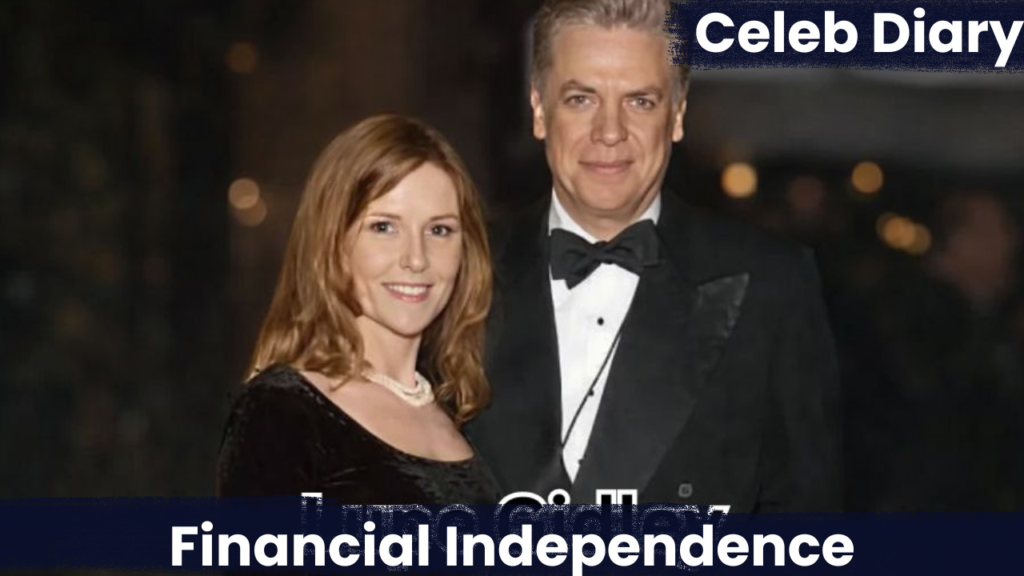
When evaluating the net worth of Lupe Gidley—estimated at between $1 million and $3 million—it is crucial to look past the number and understand the source. In modern celebrity culture, we often see figures with “inflated” net worths built on hype, venture capital-backed startups, or licensing deals that have not yet matured.
Gidley’s wealth, by contrast, is “old school.” It is accumulated wealth, not speculative wealth.
Wealth in the Analog Age
Her financial story is tied to:
- Professional Longevity: Having worked in the industry for years, she understands the value of a dollar earned through labor rather than a dollar earned through “likes.”
- Real Asset Management: The couple’s financial strategy has been grounded in real estate and traditional savings. This is the hallmark of the Hollywood professional class, as opposed to the “new money” influencer class that spends extravagantly to signal success.
- Avoiding the “Lifestyle Creep”: Celebrity life often falls into the trap of “lifestyle creep”—where spending increases in direct proportion to, or even exceeding, earnings. By keeping a low profile, Gidley and McDonald have avoided the high-visibility costs—the entourage, the publicists, the constant high-fashion spending—that often bankrupt celebrities.
Her financial status represents a quiet, consistent success. It is not the flashy wealth of a tabloid headline; it is the wealth of a family that has built a foundation for long-term security.
The Modern Search for the Unknown
Why, in 2026, are people still searching for “Lupe Gidley”?
The reason lies in the nature of modern parasocial relationships. We feel we “know” Christopher McDonald because we have seen him in dozens of films. He is a part of our cultural fabric. Because we feel we know the husband, the wife becomes a missing piece of the puzzle. The brain craves completion; it wants to know the full context of the lives of the people who entertain us.
However, Gidley’s silence serves as a boundary. Every time a fan searches for her and finds nothing, the boundary is reinforced. There is no blog post where she talks about her breakfast; no YouTube video where she gives a house tour; no TikTok where she discusses her skincare routine.
This void is not just an absence of information; it is a presence of dignity. It challenges the fan to respect that the public does not have a right to every aspect of a person’s life. In this sense, Lupe Gidley’s legacy is the quiet education of the public on the importance of maintaining an inner life that is not for sale.
The Cultural Impact: A Life Well-Lived
As we look toward the future of entertainment, the model Gidley provides becomes increasingly important. We are currently living through a period of “Celebrity Fatigue.” The public is growing tired of the constant noise, the oversharing, the fake-authentic content, and the performative activism of the internet age.
We are beginning to see a pivot toward figures who possess talent but lack the desperate need for attention. Gidley is a precursor to this shift. She reminds the industry that:
- Success can be quiet.
- Marriage can be a sanctuary, not a spectacle.
- One can work in Hollywood without being consumed by Hollywood.
While she may never be the subject of a reality show or a headline-grabbing interview, her life is a testament to the idea that the greatest act of self-determination is the ability to walk away from the fame, or, even better, to never fully embrace it in the first place.
Examining the Wider Context: The Evolution of the “Working Actor”
To truly appreciate Gidley’s position, we must contrast it with the shifting status of the “working actor.” The term refers to performers like Christopher McDonald—people who are not necessarily the top-tier “movie stars” who carry multi-hundred-million-dollar franchises, but are essential to the ecosystem of television and film. They are the character actors, the guest stars, the recurring faces that make a project credible.
In the 1990s and 2000s, working actors could have comfortable, high-status lives without needing to manage a massive social media brand. They could spend their days on set and their evenings in the privacy of their homes. Today, the demands are different. Studios now look at an actor’s “social media value” before casting them. They want to know, “How many people will this actor bring to the platform?”
This shift has created a terrifying pressure for the families of these actors. The expectation is that the family must be part of the brand. We see it in the “family vlogging” phenomenon, where the children and partners of actors are expected to be front-and-center in the marketing campaign.
Gidley escaped this pressure by existing in a time where the expectation didn’t exist. She and McDonald represent the “Last of the Privacy-Protectors.” As their generation eventually retires, the landscape of Hollywood will be increasingly dominated by figures who have been trained from childhood to equate personal visibility with professional survival.
The fact that Gidley managed to navigate this transition—staying private even as the world around her became addicted to public performance—is an achievement in itself.
Conclusion: The Legacy of a Private Citizen
Lupe Gidley’s biography is not a list of high-profile red-carpet moments or blockbuster hits. It is a biography defined by the things she didn’t do. She didn’t seek the camera. She didn’t seek the interview. She didn’t seek the endorsement.
In a world that screams for our attention, she chose silence. In a culture that commodifies every relationship, she chose intimacy.
As of 2026, as she continues to live her life away from the digital noise, Lupe Gidley remains a mirror for the public. The curiosity we feel toward her says more about us than it does about her. We are a culture that has forgotten how to be satisfied with the unknown. We are a culture that sees a blank space and feels a desperate need to fill it with assumptions, rumors, and searches.
But Lupe Gidley remains the blank space. She is the professional model who retired, the actress who moved on, the partner who stood by her husband for over three decades, and the private citizen who understood that the most precious asset one can own is not net worth, not fame, and not influence—but the right to be left alone.
Whether one is a fan of the Hollywood machine or a critic of its excesses, there is a profound, quiet power in the life of Lupe Gidley. She represents the dignified refusal to be a product. For that reason alone, her story—as sparse as it is—is worth remembering. It is the story of a life lived for oneself, and in today’s world, that is the most radical story of all.
Frequently Asked Questions (FAQ)
Lupe Gidley is an American former model and actress who became a part of the Hollywood ecosystem through her long-term marriage to the veteran actor Christopher McDonald. She is best known for her intentional, lifelong dedication to privacy.
The couple has been married since 1992, spanning over three decades. This endurance is highly unusual in the entertainment industry and is a testament to their mutual commitment to a private family life.
She was a working professional in the commercial modeling and acting space during the 1980s and 1990s. Her career was characteristic of the era, focusing on agency-led commercial work and supporting acting roles rather than seeking major celebrity status.
The scarcity of information is a direct result of Gidley’s personal choice to opt out of the public eye. She does not maintain public social media accounts, nor does she engage in interviews, which creates a natural barrier to the digital “footprint” that most celebrities generate.
While her net worth is private, it is estimated to be between $1 million and $3 million. This wealth is not derived from digital monetization or viral fame, but from a long history of professional work and responsible asset management.
Quite the opposite. Her privacy makes her an anomaly. In a time where “fame” is a requirement for many careers, her ability to maintain a private existence while connected to a highly visible public figure demonstrates that one can navigate the industry on their own terms.
While she may attend occasional industry events with Christopher McDonald, she does not engage in the media-heavy “red carpet lifestyle.” Their public appearances are infrequent and are generally treated as private outings rather than professional promotional opportunities.
She represents a “Dignified Refusal.” To the modern audience—which is accustomed to having access to the intimate details of celebrity lives—Gidley provides a necessary boundary, proving that privacy is not a sign of hiding, but a sign of healthy personal management.
The search intent is primarily parasocial. Because Christopher McDonald is a well-loved figure in pop culture, fans naturally seek to understand the human beings surrounding him. Gidley’s relative silence only amplifies this curiosity, a phenomenon common in the psychology of “mystery” surrounding public figures.
Based on her long history of avoiding the spotlight, it is highly unlikely that Gidley will ever release a public biography or memoir. Her life choices consistently prioritize the separation of her private world from the expectations of the public.

Hi, I’m Ghufran Haadi, the creator of Celeb Diary. I love writing about celebrities, net worth, lifestyle, and trending entertainment stories. My goal is to keep you updated with simple, interesting, and informative celeb content every day.

